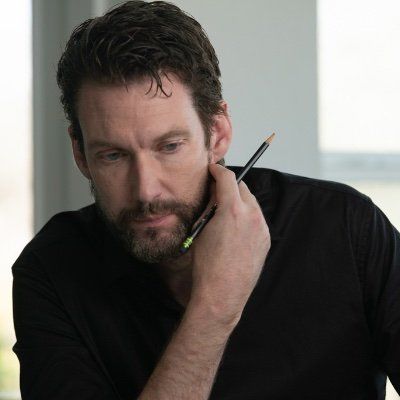
Welsh Sinfonia Chairman honoured
Welsh Sinfonia chairman Carl Grainger has been recognised as Individual of the Year by Arts & Business Cymru. Carl was presented with the award at a star-studded evening in the Wales Millennium Centre.
Highlighting his “major role in taking forward a 3 year business plan to build skills, networks and artistic standards” and praising his enormous “commitment and drive” the judges said that Carl’s “financial expertise and passion for classical music made him ideally suited to lead a process of change in the orchestra’s systems, finance and organisation.”
The Spirit of the Dance Finale – March 14th
Antony Griew, writing in the Western Mail, said:
As the final concert in its first series of chamber orchestral music ‘Spirit of the Dance’, the Welsh Sinfonia sandwiched a newly commissioned work between two pop classics. As a balanced programme it worked well. As a satisfying musical experience there was perhaps an excess of the well-known.
Bartok is one of the many 20th century composers to use folk music for inspiration. His Romanian Folk Dances are simple, fun and marvellously orchestrated. They leave the listener wanting more and are the perfect warm-up work for a band. The Welsh Sinfonia gave it a lively performance with excellent timing. The rubatos of the first movement slowed the music perfectly, like a wave breaking on the shore. The final three dances were properly madcap.
Eilir Owen Griffiths’s concerto for percussion and orchestra, ‘The Emoticons of Time’, was the commissioned work. It is in five movements, each illustrating a time of day.
‘6.00am; Gwaelod y Garth‘ opens with bass growls and swells to a wall of sound in which the percussionist (Dave Danford, who played faultlessly) and the orchestra combine rather than compete.
‘7.52am; Central Station‘ is appropriately repetitive and bustling. The whistle at its end was a fun surprise.
‘3.22pm‘ began with a long solo on drum kit. Rhythmic and exciting, it’s a good centrepiece for the work. On revision, the composer might consider varying the responses of the strings to the soloist; for me these repeats cry out for something spikier.
‘6.17pm; Pam?” In discussion, Eilir explained. Why did he always sit in the ‘quiet’ carriage when it was just as noisy as the others? This longer movement adds a sizeable orchestral percussion section to the soloist’s marimba. Its ending was satisfyingly abrupt.
‘10.36pm; Diwedd y Dydd‘ in this section the soloist moves between vibraphone and drum kit. There are nice flashes from woodwind and brass.
All in all, this is a work with some real gravitas. It keeps the attention.
Finally, the orchestra played Beethoven’s seventh symphony. The string section was the exact size for a classical symphony, probably smaller than was used at the premiere. Despite this, I didn’t sense much difference from the large bands I’m used to. This says much for a band aiming to become Wales’s much needed national chamber orchestra. The performance was fine without cavil, in no way mannered and using perfect tempi.
I’m glad I went to the concert.
March 14th – Bartok, Beethoven & Eilir Owen-Griffiths
From Music Web International
“What was certainly communicated was the music’s almost ecstatic joy, the sense of a music seeming to strain at the very confines of logic and order (yet never truly transgressing those boundaries), swept along by its own momentum, a kind of endless self-generation of succeeding phrases, a carefully-created illusion of abandonment. This was a properly exciting performance of the work, a performance which would surely have made any listener understand Beethoven’s own comment that this was “one of the happiest products of [his] poor talents”. Any orchestra that can make the listener appreciate the weight of that remark is getting a lot right.”
Mark Eager on Radio 3
Mark Eager, the Welsh Sinfonia’s Principal Conductor talked about his hopes for the orchestra’s future on Radio 3′s In Tune.
Mark Eager profile from Cardiff Life
Our Artistic Director, Mark Eager, was recently profiled in the magazine Cardiff Life. Full of surprises, the article reveals, among other things, a CV that includes a four minute mile and a love of mountain trekking.
For the full article click here…
The story behind our new logo
Our new logo is proof positive, if any were needed, that a crack team of designers will come up with ideas that the rest of us wouldn’t. We asked YogiCreative, who offered to sponsor the brand development process, for a logo which would demonstrate a bold approach, full of energy and purpose, but which still resonated with the artistic reasons for the orchestra’s existence.
What they have created is a representational “S”, a logo based on a relationship between visual art and music first articulated by the Russian abstract artist Wassily Kandinsky, 1866-1944.
Kandinsky had synaesthesia, a harmless condition which allows a person to appreciate sounds, colours or words with two or more senses simultaneously. It is an involuntary ability to hear colour, see music or even taste words which results from an accidental cross-wiring in the brain. It is not that uncommon; one in 2000 people have the condition, and it occurs in many more women than men. The authors Charles Beaudelaire and Vladimir Nabokov, the composer Olivier Messaien and the artist David Hockney probably all had synaesthesia to some degree.
“Colour is the keyboard, the eyes are the harmonies, the soul is the piano with many strings. The artist is the hand that plays, touching one key then another to cause vibration in the soul.”
Kandinsky
Young Kandinsky played the cello and the piano, and even though he is best known as a painter, music was always a significant inspiration behind his work. As his artistic career progressed, he developed his own ‘Colour Theory’, which he published as “Concerning the Spiritual in Art,” completed in 1910. According to this theory, every colour has its own character, represented by the effect of specific instruments in the orchestra.
Thus yellow, for instance, he felt to be ‘warm, cheeky and exciting’ or ‘disturbing’, and it relates to loud sharp trumpets, or high fanfares. Blue, his own favourite colour, is deep, inner, supernatural, and peaceful, a ‘typical heavenly colour’. Light blue relates to flutes, darker blues to the cello, and the darkest blue of all to the organ.
In the Welsh Sinfonia colour palette we have blue, orange, red, purple, violet, green and yellow, giving us a range of emotions from peaceful (blue) to restless energy (red) and radiance (orange), from exciting (yellow) to stillness and hidden strength (green), and from sad (violet) to powerful (purple).
And that just about says everything, not just about how we see ourselves, but about the range of feeling and emotion conjured by the music we play.
Mark Eager in Australia
May 2009
I am currently on a mammoth tour of Australia and Malaysia, which began back in early April. My first event was conducting the orchestra at the Australian Instrumental Convention in New South Wales, working alongside some fabulous well known Australian players – Janet Webb (Flute Sydney SO), Stephen Robinson (Oboe Orchestra Victoria), Andy Firth (Jazz Clarinettist) and Brendan Joyce (Leader Brisbane Chamber Orchestra) to name a few. Hearing a superb recital by Janet Webb and Jocelyn Fazzone was a real highlight – their musical relationship shining through the whole evening. I met some terrific developing talent from the Australian Conservatoires and the Sydney Street Choir which inspires “street people” to help themselves through music. Thanks to Melissa Philp for organising the event and to Trinity College for their sponsorship.
Next I flew 19 hours to Kota Kinabalu to conduct the KK Symphony Orchestra. We played a baroque programme including Brandenburg 3 with soloists from KL. I was back in my usual wonderful resort hotel – Sutera Harbour, including massage over-looking the ocean – holiday?? Well maybe a little!
It was then back to Australia with excellent workshops in Brisbane, Sunshine Coast, Cairns and Perth. In Brisbane I caught an exciting lunchtime concert in the mall by Opera Queensland and in Perth I managed to hear a fine piano recital by Katia Skaniva who played an interesting programme, including a sonata by the Australia composer Carl Vine, whose music I would like to explore more.
It hasn’t all been music though as after carefully outwitting the sharks whilst body boarding at Mulloollabar I went to my first Australian Rules football game at The Gabba, which I thoroughly enjoyed.
Following a weekend in Adelaide I continue on to Tasmania, Melbourne, Gold Coast, Cairns, Townsville, Canberra, Newcastle and Sydney.
Best wishes
Mark
home
what’s on
meet the orchestra
learning & doing
support us
news & reviews
media centre
contact us
Loading...